Posts

Week 12: Reflection

Image
This week marks the end of the semester, and I find myself with a bittersweet feeling. On one hand, I am happy to be taking a step forward in my academic journey. On the other hand, I feel a sense of sadness as I realize I will miss everything about this semester.   Each course has been impactful, contributing significantly to my growth and learning. The challenges, the late-night study sessions, the engaging discussions, and the fellowship with classmates have all been invaluable experiences. As I look back, I appreciate the knowledge I've gained and the personal connections I've made. I also appreciate all the instructors for being accessible and helpful during the semester.   As I move forward, I will carry these memories and lessons with me, grateful for the opportunities and experiences this semester has provided. While this chapter is closing, I am excited for the new ones that lie ahead, and I look forward to the continued journey of learning and growth. ...
Week 12: Social Media and People in Academia

As an active Instagram user, I've seen countless videos showcasing people's lives, including their jobs, fitness routines, and monthly expenses. However, I've never seen a page dedicated to "What people do in academia." There is a noticeable gap in content focusing on what students study, why they choose their courses, their research interests, and career aspirations—a page solely dedicated to academic pursuits. Reflecting on this gap, I sometimes think about starting an Instagram page that focuses on students from all levels: undergraduate, master's, and doctoral. This page will cover their aspirations, academic journeys, and challenges. By sharing these stories, the aim would be to inspire others and raise awareness about the diverse and impactful work happening in academia. Such a platform could serve multiple purposes. It would provide a space for students to share their experiences and achievements, creating a sense of community and support. It cou...

Week 12: Embracing Digital Platforms in Education: A Personal Reflection

For a recent Produsage project, I used Facebook to create a “1st-year (Ethics Project)” group. Facebook's user-friendly interface made organizing and sharing content easy, though managing activities across multiple platforms required careful coordination. My experience with SharePoint has been invaluable, significantly enhancing educational engagement and collaboration, particularly across different time zones. While working on the Produsage assignment, I frequently reflected on my previous teaching role and wondered why I hadn't incorporated digital platforms. Given that my students were digital natives, using such tools could have enhanced their engagement. I advocate for higher education institutions to encourage the use of email to develop students' formal writing skills and maintain written records, aligning with global professional standards. I strongly encourage medical institutions in Pakistan to integrate digital platforms into their curricula. These tools allo...

Week 11: Supporting Animal Rescue

Image
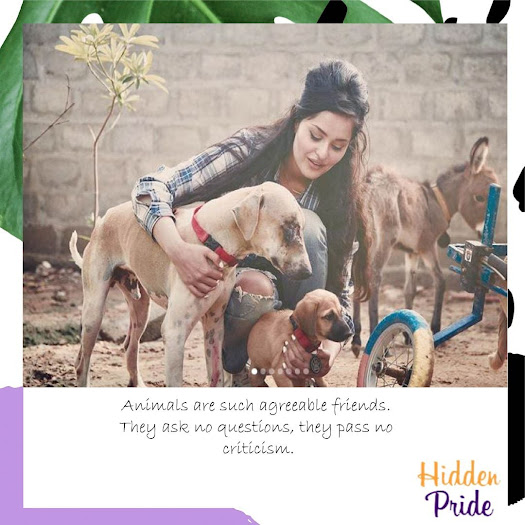
In the last few months, I have been following two Pakistani-based pages dedicated to animal welfare and rescue:  ACF Animal Rescue ,  ACF Animal Rescue  and  CDRS Benji Project . A huge shoutout to these two NGOs, who are tirelessly rescuing animals and providing them with the loving environments they deserve. I was never aware of the extent of violence animals can face. They can be beaten, poisoned, and abandoned to die. Following these two NGOs on Instagram has opened my eyes to the harsh realities that voiceless creatures endure daily. These organizations are doing incredible work. ACF Animal Rescue focuses on rehabilitating injured and abused animals, offering medical care, and finding them safe homes. They also run awareness campaigns to educate the public about animal rights and the importance of compassionate treatment. The CDRS Benji Project rescues stray and abandoned animals, providing them medical treatment, shelter, and adoption opportunities. ...

Week 11: Climate Change and Mango Production in Pakistan

Image
Climate change is an urgent crisis that affects every corner of our planet, yet it often feels like a distant issue. The reality is stark: rising global temperatures, extreme weather events, and shifting ecosystems already impact millions of lives. What’s even more troubling is the disproportionate impact on marginalized communities. Those least responsible for climate change often suffer the most. Indigenous populations, small island nations, and low-income countries bear the brunt of environmental degradation and resource scarcity.   This summer was the hottest I have ever experienced. It was so difficult to cook or even step outside. Though the temperature read 93°F, it felt more like 120°F. This intense heat has deteriorated overall life functioning.  Mangoes are our pride, and climate change has severely affected our beloved Pakistani mangoes,  renowned worldwide for being ripe, sweet, and aromatic. With cold weather lingering until the end of April and sudden ...

Week 11: Paris Olympics 2024 and Dual Standards

Image
  Last night, I shared a story on Instagram with an image highlighting a troubling inconsistency: Russia is banned from the Olympics for its war in Ukraine, yet Israel is allowed to participate despite its actions against Palestinians, which many consider to be genocide. The disparity is heart-wrenching. The world seems indifferent to the mass genocide of Palestinians, who have lost over 300 athletes in this conflict. This isn't even called a war since Palestinians are unarmed, yet we remain silent. Why don’t we recognize their humanity before labeling them by their religion or other traits? Why do we only speak out when an issue directly affects us? This dual standard is glaring. While Russia faces sanctions and exclusion, Israel's actions go unchecked, and Palestinians continue to suffer. It's crucial to reflect on these injustices and advocate for consistent, fair treatment for all, regardless of their background. Only then can we hope for a truly inclusive and just glob...

Week 9: My Experience with WhatsApp

Image
Over the past decade, WhatsApp has become essential to my daily routine, demonstrating its profound importance in numerous aspects of my life. While it thrives in places like Pakistan, its adoption in the United States remains limited. Challenges such as bans in regions like the United Arab Emirates highlight the diversity in its global reception. WhatsApp simplifies various aspects of my life, whether sharing screenshots, photos, voice notes, texts, or making calls. Its versatility has genuinely enhanced my efficiency and connectivity with others. During my last semester, WhatsApp was crucial when we formed a study group. This group became instrumental in discussing course-related challenges and sharing study materials effectively. It facilitated quick exchanges and collaborative problem-solving, significantly enriching our learning experience. However, WhatsApp isn't without its drawbacks. The abundance of groups and frequent messages often result in overwhelming notifications....

Weep 9: Article Summary " Building Library Community Through Social Media"

Image
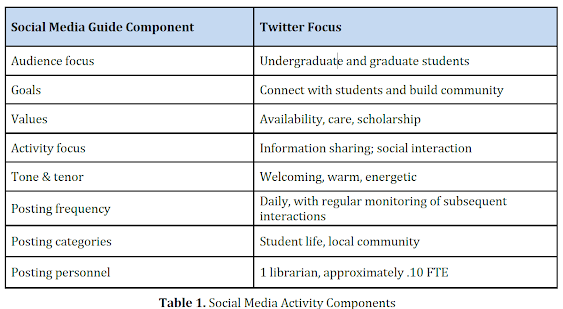
This paper details how an academic library leveraged Twitter to foster community. While existing literature predominantly addresses social media's marketing role, this research emphasizes its capacity for community-building. The university library formed a social media group and implemented a guide to cultivate a purposeful, engaging, and interactive online presence. Quantitative analysis revealed a significant rise in Twitter followers and interactions, highlighting social media's potential to strengthen the library's ties with academic communities. This study is pivotal for understanding social media's impact on academic libraries, particularly fostering user communities. Emphasizing strategy, personality, and interaction, the research provides practical guidance for libraries aiming to enhance their social media presence. Its detailed methodology and robust quantitative data make it an indispensable resource for libraries transitioning from traditional marketing ...

Week 9: Black Identity Development: Reflecting on Cross's Nigrescence Framework

This week, while writing a critical essay on Black identity development, I reflected on my experiences as a Brown female. I delved into Cross’s Nigrescence framework to understand the processes behind Black identity development, and through this exploration, I gained valuable insights. Cross's framework describes the five stages of Nigrescence, the process of becoming Black: Pre-Encounter, Encounter, Immersion-Emersion, Internalization, and Internalization-Commitment. These stages outline the psychological and social changes that Black individuals experience. The Five Stages of Nigrescence 1. Pre-Encounter: In this stage, Black individuals often internalize societal stereotypes and adopt assimilationist attitudes, believing that fitting into White norms is essential for success. This internalization can lead to feelings of self-hatred and a low sense of racial salience. Such Black students might see their lack of academic success as a personal failing rather than a consequ...

Week 7: Reflection and Faculty Support

Last week was quite stressful for me. As I shared in my blog, I must start preparing for my expected Prelims in January. Amidst this stress, a faculty member asked if I was okay. After our conversation, I felt immensely relieved and confident that I could ace the exam. This experience underscores the crucial role of faculty support in student success. I strongly advocate for this support, having personally contributed to students' academic and moral development in the past. Without such mentors, students often find themselves vulnerable, lacking the guidance and encouragement to navigate their academic journeys effectively.

Week 7: Male Privilege, Moral Corruption, and Women Hypocrisy

After watching the movie “12 Years a Slave”, how white owners exploit black female slaves sexually and how their wives did not blame their husbands and punish the black female slaves have made me think about the moral corruption of people with power.   The movie portrays the physical and psychological torture inflicted on slaves by their owners and how the slaves endured them. Slaves were treated as chattel property, deprived of their identities, and subjected to constant fear and violence. This objectification and dehumanization are starkly contrasted with the more subtle psychological torment, which probably left lasting scars on their psyche. The movie further highlights the unique struggles of enslaved women, highlighting the harsh conditions of their lives, their children being sold separately, and disregarding their cries and sufferings. Furthermore, young women were often sold at higher rates than older women, subjected to nudity, and slept with male slaves. These conditions...

Week 7: Multifunctional Female Body

  This week, I wrote a critical essay on “12 Years a Slave,” and I am still processing how a black female slave in the movie was treated. The film highlights the exploitation and suffering of Black women, the pervasive physical and psychological torture endured by slaves, and the deeply ingrained racial prejudices of the time. One of the most disturbing representations in the film is Patsey’, who embodies the collective suffering of all enslaved African American women. Patsey's character illustrates the severe physical and sexual violence inflicted upon Black women. She was not only subjected to harsh physical labor but also exploited for sexual pleasure by her owner. This dual exploitation highlights the multifaceted abuse of the Black female body, used for both physical labor and sexual pleasure, reflecting a broader societal view of slaves as mere objects rather than human beings. These dynamics highlight how race, gender, and free status intersect to compound the suffer...

Week 6 weekly Reflection

At this semester stage, I'm feeling exhausted and battling self-doubt. The upcoming prelims in the Spring require early preparation, which adds to my concerns. Balancing this with my regular coursework seems overwhelming, and I'm unsure how to handle it. Thoughts like "Will I manage?" persistently trouble me. I wish to have a break to prepare for my prelims with a free mind!  I wish I had 30 hours a day!  I wish I could manage stress, get long breaks to relax, and focus on upcoming exams!

Week 6 “Chapter 4: Networked Knowledge Activities”

Dennen's forthcoming chapter is well-crafted and comprehensively explains six knowledge activities: collecting, curating, sharing, brokering, negotiating, and constructing. The chapter also explores three supporting activities often associated with these knowledge processes: networking, tagging, and annotating. 1.     Collect: In an online context, collectors save and organize digital content by bookmarking web pages, favoriting or marking items on social media, or downloading media like PDFs, photos, and music to their computers. This collection can be purposeful and formal, such as gathering resources for a specific project, or more casual, such as saving items they find interesting for later use.    2.     Curate: Social media curation involves creating organized, annotated collections of online artifacts. This term, borrowed from museums, archives, and libraries, describes selectively building a collection to serve a specific p...

Week 6: Social Network Site (SNS) “Facebook” and Networked Knowledge Activities (NKA)

Image
While reading this week’s article by Dennen et al. (2020), I was reminded of when I taught Grade 2 as a pre-Junior teacher about seven years ago. During that time, I regularly posted activities on Facebook as part of the summer holiday homework, and all the students were part of the group. The students were excited to use Facebook and engage in activities on digital platforms, which also allowed them to stay connected with their classmates during the break. They actively participated in the comments, sharing their perspectives and what they had learned. My experience aligns well with the authors' findings that “Facebook has a high degree of posting and commenting, with knowledge negotiation frequently visible in the comment-based dialogues” (p.167). Additionally, Facebook is designed to support direct knowledge construction through various posts and comments. The platform’s structure encourages interactive discussions, making it an effective tool for collaborative learning. Moreo...

Week 4: Weekly Reflection

Image
               Each week, I am not only becoming more familiar with digital tools and platforms but also gaining confidence and comfort in using them✌. The consistent exposure and knowledge have significantly enhanced my skills and ease with these digital resources.  The Web 2.0 Course continuously encourages me to explore these platforms, not only as a side hustle but also as a way to relax and engage in purposeful activities. This inspiration has sparked several ideas that I can pursue while remaining behind the camera.                 In the coming days, I hope to embark on a project that brings fulfillment, happiness, and a sense of purpose. By leveraging what I've learned in the course, I aim to create something meaningful that resonates with my passions and interests 🎈🎊.

Week 4: "Power of Tagging and Stories"

Image
          As an active user of Instagram, I have come to appreciate the power of features such as tagging people and sharing stories. These tools are incredibly effective in several ways: ·        Firstly, they allow us to show support for our communities by highlighting local initiatives, accomplishments, and events. By tagging individuals and businesses, we can amplify their voices and help raise awareness about important issues or achievements. ·        Moreover, these tools play a significant role in creating a positive global image. By sharing diverse stories and tagging people from different parts of the world, we can foster a sense of global connectivity and cultural understanding. This soft diplomacy can help bridge gaps and build a more cohesive global community. ·        Supporting local and home-based businesses is another major benefit. Through ta...

Week 4: Digital Platforms and "Shift in the Earning Patterns" in a Developing Context

Image
                                              Nowadays, I am very keen to observe the shift in earning patterns. As a millennial, I was always taught at school, university, and home that studying must come first and that a job obtained after earning a degree was the primary path to income. There seemed to be no alternative. However, I have observed a significant change with the rise of digital platforms. Young people in Pakistan now earn substantially more than degree holders at a very young age. Given the declining economy and currency depreciation, the youth are increasingly drawn to earning in dollars through digital platforms that offer the flexibility of working from home and being their boss. Examples include vlogging, content creation, and add/drop shipping on Amazon, YouTube, Instagram, etc. Such earners are having a great lifestyle as they are earnin...

Week 3: Shared Awareness in a Developing Context

Image
For years, when social media and internet access were limited and print and TV media were state-controlled in Pakistan, people revered the military and the state. They had to believe the official narratives. However, with increased internet access and social media presence, a "shared awareness" has emerged as people have become more informed and critical of political dynamics, better understanding the true state of affairs. Reading  “The Latent Community in Every Webpage”  by  Clay Shirky  made me reflect on the current political climate in Pakistan. The recent elections saw the highest voter turnout in history, driven by a shared awareness of the importance of voting rights. People are now more engaged and recognize the importance of their voting rights. This change shows a more informed and active population, thanks to the shared information and discussions on social media and the internet.                 

Week 3 Article Summary: "Context Collapse and Student Social Media Networks: Where Life and High School Collide"

Image
Key Terms Context collapse: Online social media networks provide a space for free expression and, in the process, create the potential for their social groups to mix, which results in context collapse. Virtual third space: These online platforms provide them with a social interactive space, neither school nor home, and it's not a primary field for any actor, and people can freely socialize with one another. This space provides more options to the teens for social connection . The article aims to explore social media use among high school students, looking at how online social networking platforms like Facebook, Twitter, Instagram, and Snapchat serve as virtual third spaces, bridges across physical environments, communities, and purposes. The study focuses on the following research questions : What social media tools are high school students using? What do high school students’ personal and school communities look like? How do high school students use social media tools to acce...